

EV Charging at Home in the UAE: What’s Possible & What You’ll Need
21 December 2025
EVs are becoming a common sight on UAE roads, thanks to government green initiatives and a growing range of models. While public charging networks in cities like Dubai and Abu Dhabi are expanding, home EV charging remains the obvious, ultimate convenience for most.
A common concern for prospective EV owners is whether home charging is practical. Apart from convenience, installing a charger at home is also the most cost-effective way to power your EV. However, it requires knowing local regulations, choosing the right equipment, and working with approved professionals. Here’s what you need to know to set up EV charging at home.
Understanding the Basics
To charge an electric vehicle at home, you need a Level 2 AC charging station, often referred to as a ‘wallbox’.
Power and Plug Requirements
- Power Output: Most residential wallboxes installed in the UAE are rated for 7kW or 11kW. 22 kW is commonly chosen by larger properties. These chargers make overnight EV charging in the UAE easy and can be fitted in villas, apartments, or private garages.
- Plug Standard: AC EV‑chargers typically use the Type 2 connector, which is the standard interface for most residential charging units. For fast‑charging, the CCS or CHAdeMO plugs are more common. Always check your vehicle’s plug type to ensure compatibility.
What You’ll Need for Home EV Charging
A successful installation relies on a combination of hardware, professional service, and proper documentation:
- The Charger Unit (Wallbox): A Level 2 AC charger with a minimum IP54 rating to ensure protection against dust and water, suitable for the local climate.
- A Dedicated Circuit: The charger needs to be connected to its own electrical circuit, separate from the rest of your household appliances. This circuit should include the right circuit breaker and a Residual Current Device (RCD) to ensure safety.
- Electrical Capacity Check: A certified installer must assess your home’s main distribution board (DB) to make sure it has sufficient spare capacity to handle the continuous high load of the charger. Older villas might need a panel upgrade.
- Professional Installation: Installation must be performed exclusively by a licensed and approved electrical contractor for full compliance with local utility regulations.
The Regulatory and Approval Process in the UAE
The UAE’s regulatory bodies, like the Dubai Electricity and Water Authority (DEWA) in Dubai, the Abu Dhabi Distribution Company (ADDC) in Abu Dhabi, and the Sharjah Electricity and Water Authority (SEWA) in Sharjah, strictly govern EV charger installation to maintain grid stability and safety.
Navigating DEWA Approval (Dubai)
In Dubai, securing approval from DEWA is mandatory before installing a private EV charger. This process ensures the setup is safe, efficient, and doesn’t destabilize the local grid.
- Select a DEWA-Approved Contractor: The contractor handles the technical assessment and the submission of all necessary documentation.
- Submit Documentation: This usually includes technical drawings (like a Single Line Diagram), electrical load calculations, charger specifications, and property details.
- Obtain NOC: For apartment dwellers, a No-Objection Certificate (NOC) from the building management or Owners’ Association is a prerequisite before submitting to DEWA.
- Inspection and Final Approval: After installation by the approved contractor, a final inspection by the utility engineer may be needed to grant the legal approval to commence charging.
Failure to follow the official utility channels risks fines, insurance complications, and safety hazards. By using approved professionals, you guarantee compliance for your home EV charging.
Estimated Installation Costs
The cost of installing a safe and approved Level 2 charger typically ranges from AED 2,000 to AED 5,000+, depending on the wallbox brand, installation complexity (e.g., distance from the main panel, electrical upgrades), and permit fees. Running costs are significantly lower than public fast-charging tariffs, as electricity usage is added to your regular monthly utility bill at the standard residential rate.
Smart Charging Tips for Home EV Owners
A well-optimized home EV charging setup can save you money, protect your battery, and ensure safe use.
- Charge during off-peak hours: Nighttime charging comes with lower electricity tariffs, reducing running costs.
- Leverage solar power: If you have solar panels, using them for EV charging can further cut electricity expenses and support sustainable energy use.
- Choose a smart charger: WiFi or app-enabled chargers allow you to schedule charging sessions, monitor progress, and track electricity consumption easily.
- Follow safety best practices: Always use a dedicated electrical circuit, keep cables and connectors clean, and inspect for wear or damage regularly.
Maintain consistent charging habits: Stick to manufacturer guidelines for charging patterns to protect battery health over the long term.
Charger Trouble? Stay Ready!
Being prepared for unexpected issues ensures your safety and the reliability of your charging setup.
- Keep installer contacts handy: Have your certified installer’s information readily available for urgent problems.
- Portable Chargers: Keep a compact, certified portable charger on hand for unexpected situations.
- Know how to cut power safely: Understand how to turn off the main circuit if a malfunction occurs.
- Avoid self-repair on high-voltage components: Only trained professionals should handle EV electrical issues.
- Follow manufacturer safety guidelines: Adhering to recommended procedures prevents accidents and maintains the reliability of your home charger.
Consider Hybrid Options Before Going Fully Electric
While the infrastructure for full EVs is rapidly improving, the long-term cost implications of battery ownership and the fast pace of technological change lead many drivers to reconsider outright EV purchase. This is where hybrid vehicles provide an excellent, lower-risk stepping stone.
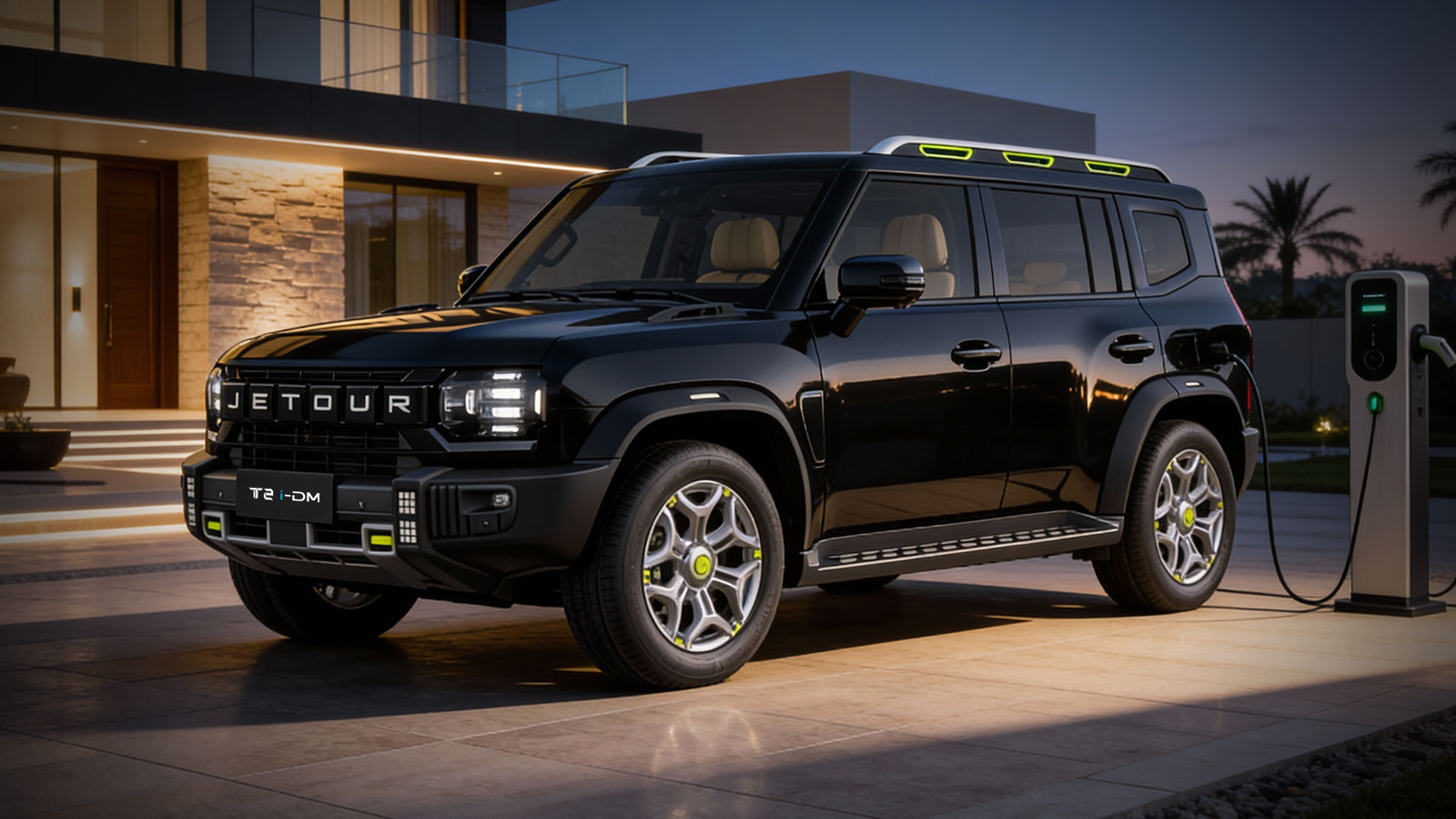
We at Art Elite Car Rental recognize that the future of mobility is electric, but the transition needs to be practical for our clients. Leasing a standard or a plug-in hybrid like the Soueast S06 DM Plug-in Hybrid or the Jetour T2 i-DM, lets you enjoy fuel efficiency and a touch of electric driving without the full financial commitment of owning an EV. Contact us to learn about our flexible car lease options and get ready to drive the future today!
Frequently Asked Questions
Yes, home EV charging is safe when installed according to local regulations. You’ll need a certified installer, a dedicated circuit, and approval from your utility authority (e.g., DEWA, ADDC, SEWA). Apartment dwellers also require a No-Objection Certificate (NOC) from the building management.
A Level 2 AC charger, also called a wallbox, is recommended for home charging. Most residential units are rated at 7 kW or 11 kW, offering efficient overnight charging. Ensure the unit is weatherproof (minimum IP54) and compatible with your vehicle’s plug type, usually Type 2 for AC charging.
Installation costs can typically range from AED 2,000 to AED 5,000, depending on the wallbox brand, distance from your main electrical panel, and whether an electrical upgrade is required. Running costs are low, as electricity usage is billed at your standard residential rate.
Not necessarily. Hybrids, especially plug-in hybrids like the Soueast S06 DM and the Jetour T2 i-DM, can benefit from home charging setups. Using a hybrid allows you to experience electric-style driving and fuel efficiency without fully committing to EV battery ownership, making it a practical stepping stone toward future electric mobility.
RELATED BLOGS
05 August 2026
The Jetour T2 Takeover in Dubai